Brisbane Property Market Correction 2026: Why Not All Property Is Falling Equally
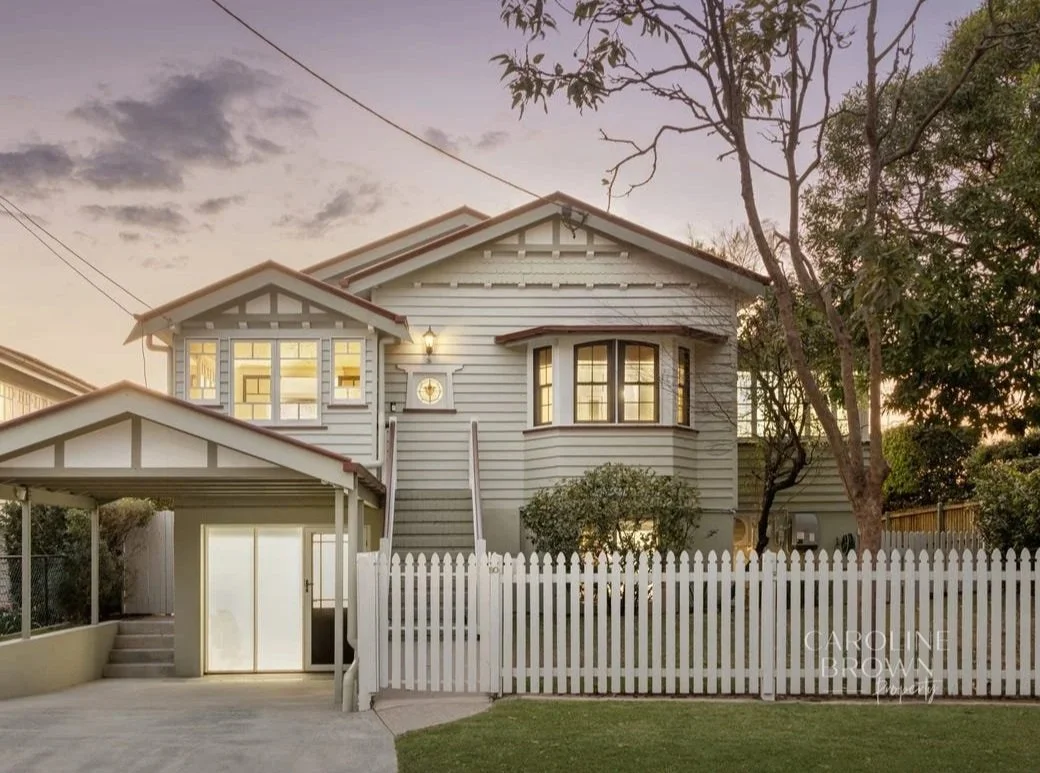
80 Lewin St, Bardon went under contract following 20 days on market. Image courtesy Caroline Brown Property.
After years of strong growth, Brisbane has finally started to experience a meaningful correction.
But there is something I think buyers and sellers need to understand:
A falling market does not mean every property becomes a bargain.
In fact, one of the things I'm seeing on the ground right now is almost the opposite. Some properties are becoming easier to negotiate, whilst others are still attracting significant competition — and the difference often comes down to one thing: the quality and scarcity of the property itself.
The numbers tell us Brisbane is cooling
The latest PropTrack data shows Brisbane home prices fell another 0.2% in September, marking the sixth consecutive monthly decline, whilst the latest Brisbane auction clearance rate sits at 21% — a significant drop from 47% the same time last year.
Brisbane's median property value is now around $1.033 million, approximately 3.9% below its March 2026 peak — a decline of roughly $42,000 for the typical Brisbane property.
However, values are still 4.1% higher than they were a year ago, and that is an important distinction.
We are no longer in the extraordinary growth phase Brisbane experienced earlier this year, but we are also not looking at a market where property values have suddenly been wiped out. Instead, we're seeing a market that is resetting, which is happening alongside a significant change in borrowing conditions, as the Reserve Bank increased the cash rate to 4.60%, its highest level since 2011.
The latest market data is also suggesting longer selling periods, more choice for buyers and a wider gap between seller expectations and what buyers are prepared to pay.
So yes — the Brisbane market is softer, but here's where I think things get interesting.
I'm still seeing fierce competition
I'm currently buying for a couple who are looking for a very particular type of property, and despite everything we're hearing about the Brisbane correction, we are still experiencing strong competition. We have inspected properties where there are multiple interested buyers, and spirited bidding, which is keeping sale prices consistent with early 2026 figures. At first glance, you could look at that and think:
"But I thought Brisbane was falling?"
It is, but the property we're looking to secure sits in a segment of the market that I believe is less exposed to the correction.
Why? Because it is the kind of property buyers don't have an endless supply of alternatives for, and that experience is a reminder of something I've believed for a long time:
The property market isn't one market.
Brisbane isn't one market
It's very easy to read a headline saying:
"Brisbane property prices fall again" — and assume that means every property in Brisbane is becoming cheaper and easier to buy. But property doesn't work that way. A generic property with several comparable alternatives is one thing. A genuinely scarce property with strong owner-occupier appeal is another, and the difference becomes particularly important when the market turns.
In a rising market, almost everything can look good, but when conditions change, the market starts asking a different question:
What is this property actually worth to a buyer?
And that's when quality becomes much more important.
The correction isn't affecting everything equally
One of the more interesting things emerging from the latest data is the divergence between different segments.
An example is the recent sale of 17 Stoneleigh Street, Albion which you might have seen featured on my social media earlier last month.
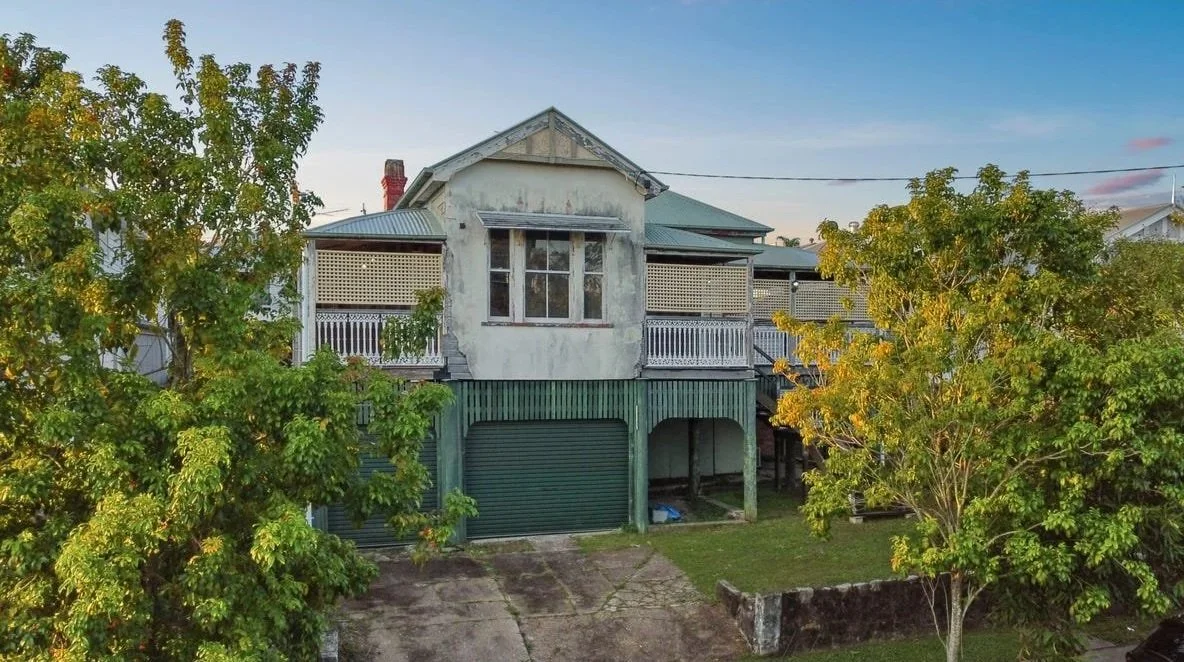
The house at Stoneleigh Street, Albion had 8 registered bidders.
It sold for $1,753M under the hammer.
I attended the auction and was surprised to see a crowd of people, and 5 active bidders fighting it out over 30 minutes of auction action. Bidding opened at $1M and eventually slowed to $1.5M, but competition continued through $1,000 and $5,000 increments, with around $30,000 of the final bidding coming through those tiny bids. Most bidders were families, with the property selling to an owner occupier.
Interestingly, the under-bidders were a family who had recently sold their home one street away.
The rundown Queenslander attracted a total of 8 registered bidders — an extraordinary level of competition for a property that required substantial renovation work to bring it what I would consider an acceptable liveable condition, further supporting my argument that the correction isn't affecting every segment equally.
“A declining market doesn’t necessarily reduce competition for scarce property. —
It can actually make scarcity more valuable.”
Cotality's September data shows that higher-value detached housing has experienced considerably more pressure in some major markets, while more affordable property and units have generally been more resilient. Nationally, the median time a property spends on the market has increased to 39 days, compared with 28 days a year earlier, while seller discounting has widened.
PropTrack also reports that houses are experiencing greater price pressure than units nationally, with national house prices down 0.4% year-on-year compared with unit prices still 1.8% higher.
So even the statistics tell us the same thing: there isn't one uniform correction.
Different properties, locations and price points are responding differently.
And that's why I don't think the most useful question for a buyer is:
"How much is Brisbane going to fall?"
I'd ask something else.
"What am I actually buying?"
If you're considering buying over the next six months, I would be much more interested in the quality of the individual property than trying to predict the exact bottom of the Brisbane market.
I'd be asking things like:
Is the position difficult to replicate?
Does the property have strong owner-occupier appeal?
How many comparable alternatives exist?
Would I still want to own it if prices declined or remained stagnant for five years?
These questions matter because the best property isn't necessarily the one that falls the most in price — and the cheapest property isn't necessarily the best opportunity.
The market may be giving buyers something valuable
There is, however, a genuine opportunity emerging for buyers. It’s no doubt, the frenzy has eased and the latest data shows buyers are open to more choice and greater negotiating power as higher interest rates reduce purchasing capacity. But I'd make one important qualification:
Don't confuse a softer market with a reduced buyer pool for every property.
The couple I'm currently buying for are a perfect example.
We're not seeing the same level of competition everywhere, but when we find the type of property they actually want — the property that is highly desirable and difficult to substitute — competition can still be very real.
And that is exactly why I believe buyers need to become more discerning, not simply more price-focused.
So what do I think happens over the next six months?
My expectation is that Brisbane will continue to see further softness, and a much greater divide between exceptional property and ordinary property. An increasingly segmented market.
The full effect of this year's interest-rate increases has not necessarily worked its way through household budgets and purchasing decisions just yet, but I wouldn't be surprised to see further price declines before the market eventually stabilises.
Some properties will sit, whilst sellers adjust their expectations, and then there will be those rare, in-demand homes that will continue to attract competition. — This is the segment I will be watching closely. Because in my experience, the most interesting buying opportunities aren't necessarily created by falling prices. They're created when you can identify a genuinely good asset and then buy it well.
Don't buy because the market is falling
If you're currently looking to buy, I wouldn't encourage you to buy simply because Brisbane property prices have fallen from their peak. Nor would I tell you to wait for some magical number at which the market becomes "cheap." Nobody knows exactly where the bottom will be, and even if we did, that wouldn't tell us whether a particular property represents good value.
A mediocre property can still be a mediocre property at a 10% discount, and a highly desirable property can still be a very good acquisition even if it doesn't come with a huge discount.
The objective isn't simply to buy cheaply.
It's to buy well.
And I think that distinction is going to become increasingly important as Brisbane moves through this next phase of the cycle. After several years where urgency dominated the conversation, we're moving back towards a market where judgement matters.
For buyers, that's potentially a very good thing. Because when the market becomes less frantic, you have more opportunity to slow down, assess the asset properly, negotiate intelligently and make a decision based on what you're actually buying, rather than fear of missing out.
And that, ultimately, is what good property acquisition should be about.
Not buying more property.
Buying better property.
To work with me directly, explore my Private Client Services.